


Paulownia vs Goat Milk Farming - Five Key Issues: Costs, ESG, Technology, and Market Insights
A fast-growing tree can turn sunlight into timber. A well-managed dairy goat can turn roughage and water into high-value food. Both look attractive on paper. Both can also fail if the decision is based on a single promise, such as “quick growth” or “healthy milk”, rather than a full business intelligence view.
For managers assessing agriculture, food, timber, or rural investment, paulownia and goat milk are not just farming options. They are two different operating models. Paulownia moves from seedling to wood processing and furniture. Goat milk moves from livestock care to fresh milk, cheese, yoghurt, and other nutritious dairy products.
This article compares the two through the Webintelligency lens: cost, habits, ESG aspects, geopolitics, economics, and technology. It is written for strategic review, not as agronomic or veterinary advice.
The top 5 issues this article addresses
Capital timing and cash flow
Paulownia usually requires patience. Revenue often comes after several years, when timber is harvested. Goat milk can generate earlier cash flow, but it demands daily labour, feed, health care, and cold-chain discipline.
Operational habits
Tree farming depends on planting quality, irrigation, pruning, and long-term field monitoring. Goat milk depends on daily milking, hygiene, animal nutrition, breeding cycles, and product handling.
ESG exposure
Paulownia can support soil cover, carbon storage, and lightweight timber use when managed responsibly. Goat milk can support rural livelihoods and protein supply, but it also carries manure, methane, water, and animal welfare responsibilities.
Geopolitical and market risk
Timber, feed, energy, packaging, veterinary inputs, and transport are all exposed to trade routes, currency shifts, conflict, climate stress, and import policy. The Middle East adds a special layer because water, heat, and food security are strategic issues.
Technology and market intelligence
Sensors, drones, genetics, milk testing, herd software, sawmill planning, and market data can improve results. Still, technology works only when it fits the farm’s operating model and commercial plan.

Paulownia and goat milk follow different business clocks
The first difference is time.
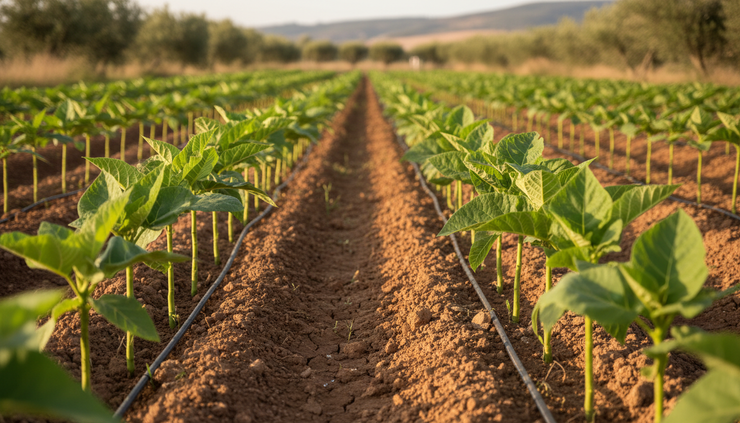
Paulownia is a biological asset with a long cash cycle. The project starts with seeds, cuttings, or nursery plants. Then comes land preparation, irrigation planning, planting, fertilisation, pruning, weed control, and protection from stress. The commercial target is usually timber, often for boards, veneers, furniture parts, musical instruments, packaging, interior panels, or other light wood uses.
Goat milk farming is a daily production business. It starts with genetics, herd purchase, housing, feed planning, veterinary protocols, milking systems, and milk cooling. Revenue may come from raw milk where regulations allow it, or more often from processed products such as soft cheese, hard cheese, yoghurt, labneh-style products, kefir, ice cream, infant or senior nutrition applications where approved, and specialty ingredients.
The difference matters because each model suits a different investor profile.
Paulownia suits capital that can wait for harvest. It also suits operators who can manage land over time and sell wood into a real buyer network. Goat milk suits teams that can run a disciplined daily operation, protect quality, and build repeat demand.
A simple way to separate them is this:
Paulownia farming
Goat milk farming
Long biological cycle, lower daily handling, harvest-driven revenue, land and water sensitivity, timber market exposure
Daily production cycle, high labour and hygiene needs, faster product turnover, feed and animal health sensitivity, food market exposure
Neither model is “better” by default. A paulownia project can underperform if trees grow poorly, wood quality is low, or mills are too far away. A goat dairy can lose money if feed costs rise, milk yield disappoints, hygiene fails, or the market does not pay a premium for goat products.
The managerial question is not which farm sounds more attractive. It is which risk profile matches the available land, skills, capital, water, regulations, and buyers.
Cost structures are not comparable unless timing is included
Managers often compare farming projects by margin. That is useful, but incomplete. A goat dairy and a paulownia plantation spend money at different rhythms.
Paulownia cost drivers
Paulownia costs usually concentrate in the establishment phase and in key silviculture actions. Common cost areas include:
Land access or land opportunity cost
Soil testing and field preparation
Seedlings or planting material
Irrigation infrastructure where rainfall is not enough
Fertiliser and soil improvement
Weed control and pest monitoring
Pruning and shaping for straight timber
Labour during planting and maintenance windows
Harvesting, transport, sawing, drying, and grading
Certification or documentation if selling into premium markets
The hidden cost is quality discipline. Furniture-grade wood does not appear by accident. The trunk must develop in a way that supports usable boards. Poor spacing, water stress, storm damage, bad pruning, or weak genetic material can reduce the value of the final log.
Paulownia is known as a fast-growing hardwood genus. Some species and hybrids can grow quickly under good conditions. Yet “fast-growing” is not the same as “guaranteed commercial timber”. Growth depends on climate, soil depth, water, planting material, management, and end-use standards.
A serious forecast should use scenarios rather than a single harvest number. For example:
Conservative growth with lower timber quality
Base growth with mixed grades
Strong growth with furniture-grade logs
Delayed harvest due to market weakness
Partial loss from drought, frost, pests, or fire
This is where business intelligence matters. A beautiful row of trees is not yet a furniture business. The project needs sawmill access, drying capacity, grading knowledge, buyer relationships, and price evidence.
Goat milk cost drivers
Goat milk costs are more continuous. The farm spends every day before it sells every day.
Common cost areas include:
Breeding stock and replacement animals
Housing, shade, ventilation, and bedding
Feed, forage, minerals, and water
Milking equipment and maintenance
Cooling tanks and energy
Veterinary care, vaccination, and biosecurity
Labour for milking, feeding, cleaning, kidding, and records
Milk testing and quality control
Processing equipment for cheese, yoghurt, or bottled milk
Packaging, labelling, storage, and distribution
Compliance with food safety and animal welfare rules
Feed is often the largest operating expense in small ruminant dairies. This is especially important in dry regions where pasture cannot carry the herd all year. Imported grain, hay, protein meal, and mineral mixes can link the farm’s profitability to global commodity markets.
For goat dairy products, the hidden cost is cold-chain and hygiene control. Milk is perishable. Poor cooling, dirty equipment, or weak processing discipline can destroy value fast. In many markets, legal sale depends on pasteurisation, testing, traceability, and approved facilities.
The upside is earlier and more regular revenue. A goat dairy can build a product line and customer base month by month. Cheese and fermented products can also extend shelf life and raise value per litre, if the brand, recipe, and food safety controls are strong.
What managers should compare
A fair comparison should include:
Time until first revenue
Peak working capital need
Labour intensity
Water and energy demand
Sensitivity to input prices
Distance to buyers or processors
Regulatory burden
Biological risk
Exit value of land, herd, equipment, and timber
When comparing paulownia trees, goat milk investments, the real issue is not crop versus livestock. It is asset maturity versus daily product discipline.
Consumer habits shape the value chain
Agriculture does not end at the farm gate. Paulownia needs timber buyers. Goat milk needs consumers who accept its flavour, price, and format.
Furniture and wood habits
Paulownia wood is valued in several markets because it is light, workable, and relatively stable when dried well. These traits can support furniture components, interior design uses, shelves, doors, panels, carving, and lightweight structures.
Yet furniture makers do not buy a story. They buy specifications. They care about:
Board size
Moisture content
Grain consistency
Defects
Strength requirements
Colour
Machining behaviour
Finish quality
Reliable supply
A plantation that cannot supply consistent material may have to sell into lower-value channels. This is why the chain from seed to furniture must be mapped early. A manager should ask who will dry the wood, who will grade it, who will process it, who will buy it, and what quality claims can be proven.
Consumer habits in furniture are also shifting. Many buyers look for lighter materials, natural textures, lower-impact materials, and traceable sources. Certification can matter in export markets, especially where retailers face pressure to document responsible sourcing. Still, certification adds cost and paperwork, so it should be tied to a buyer requirement rather than treated as a slogan.
Dairy and nutrition habits
Goat milk has a long tradition in the Middle East, Mediterranean countries, parts of Africa, and Asia. In some households it is familiar. In others it remains a niche product with a strong flavour profile.
Research literature commonly notes that goat milk differs from cow milk in fat globule size, protein composition, and mineral profile. Some consumers find it easier to digest, although tolerance varies by person. It is not automatically suitable for people with milk allergy, and medical claims should be avoided unless supported by approved evidence.
The strongest commercial route is often not liquid milk alone. It is value-added dairy:
Fresh soft cheese
Aged cheese
Yoghurt
Labneh-style spreads
Fermented drinks
Desserts
Specialty nutrition products where regulations allow
Managers should separate “nutrition appeal” from “market demand”. A product can be nutritious and still fail commercially if the taste, price, packaging, and distribution do not fit local habits.
In Israel and the wider region, goat dairy can connect to culinary traditions. It can also serve premium urban consumers who seek speciality cheese and local food. But premium markets are demanding. They expect stable quality, food safety proof, and reliable supply.
ESG analysis must be specific, not decorative
ESG can improve decision-making only when it is measurable. Both models can support sustainability goals, and both can create harm if poorly managed.
Paulownia ESG profile
Potential benefits include:
Tree cover on suitable land
Carbon stored in biomass and wood products
Soil protection when ground cover is maintained
Lightweight timber that may replace heavier materials in some uses
Possible use of marginal land, if water and soil conditions are appropriate
The risks are just as real:
Water demand in dry areas
Monoculture vulnerability
Invasive behaviour concerns in some regions and species
Fertiliser and chemical misuse
Fire exposure
Overstated carbon claims
Carbon claims need caution. A tree stores carbon as it grows, but the climate benefit depends on what happens next. Long-life furniture stores carbon longer than short-life waste. Harvest, transport, drying energy, and land-use change all affect the result. The Intergovernmental Panel on Climate Change, known as the IPCC, has long treated land use and forestry as key parts of climate accounting, but the accounting must follow recognised methods.
Goat milk ESG profile
Potential benefits include:
Local protein production
Rural employment
Use of crop residues or roughage where managed well
Smaller animal size compared with cattle, which can suit small farms
Specialty food production with cultural value
Main risks include:
Methane from digestion
Manure management problems
Feed import dependence
Water demand for animals, cleaning, and feed crops
Animal welfare failures
Energy use in cooling and processing
The Food and Agriculture Organization of the United Nations has published widely on livestock emissions, food security, and sustainable animal production. The lesson for managers is clear: livestock ESG performance depends on feeding efficiency, health, manure handling, productivity, and land management.
A poorly managed low-yield herd can have a worse footprint per unit of product than a healthier, better-managed herd. Better productivity, within welfare limits, often improves both economics and environmental performance.
ESG questions for both models
A serious ESG assessment should ask:
What water source will the project use?
Is the land suitable without ecological damage?
What biodiversity risks exist?
What waste streams will be produced?
How will animal welfare or tree health be monitored?
What evidence supports carbon, nutrition, or sustainability claims?
What local communities gain or lose?
Which certifications or audit systems matter to buyers?
This is also where Webintelligency’s business-oriented intelligence approach fits. Strategic consulting services, traffic analysis, and ESG aspects should connect farm-level facts to real buyer behaviour, transport routes, policy risk, and investor reporting needs.

Geopolitics and economics decide whether the model can scale
Agriculture is local, but its economics are global. A paulownia plantation may rely on imported planting material, fertiliser, equipment, saw blades, drying technology, or export demand. A goat dairy may rely on imported feed, veterinary products, enzymes, packaging, cooling equipment, or energy.
This is especially relevant in the Middle East. Water scarcity, heat stress, port access, regional conflict, currency pressure, and food security policies all affect farming economics. Managers should not treat geopolitics as background noise. It can change the cost base in one season.
Paulownia geopolitical exposure
Paulownia is exposed to:
Land-use regulation
Water policy
Import rules for planting material
Timber import competition
Construction and furniture demand
Fire risk and insurance availability
Transport routes to mills and ports
Trade standards in export markets
If an economy imports much of its timber, local paulownia could offer strategic value. But import substitution works only if local wood meets quality and price expectations. If imported boards are cheaper, more standardised, or easier for furniture makers to use, local growers need a clear advantage.
That advantage may be shorter supply chains, traceability, custom cuts, lower transport emissions, or national procurement preference. Each must be tested with buyers before planting at scale.
Goat milk geopolitical exposure
Goat milk is exposed to:
Feed grain prices
Veterinary supply chains
Energy prices
Food safety regulation
Labour availability
Refrigerated transport
Import competition from cheese and milk powder
Religious and cultural dietary standards
Tourism and food service demand
A goat dairy is often more sensitive to short-term shocks than a tree plantation. If feed prices rise sharply, the farm feels it quickly. If electricity costs rise, cooling and processing become more expensive. If food service demand falls, cheese inventory may build.
At the same time, goat dairy can adapt faster. The farm can adjust herd size, product mix, processing schedule, direct sales, and distribution channels. Paulownia has less flexibility once planted. Changing species, density, or market target after several years can be costly.
Economic indicators to monitor
For both models, managers should track a small set of signals:
Local water tariffs or pumping costs
Feed commodity prices
Fertiliser prices
Energy prices
Labour costs
Exchange rates
Freight and cold-chain costs
Furniture, construction, and food service demand
Regulatory changes
Insurance availability
The right dashboard depends on the project. A paulownia dashboard should track tree growth, survival, timber demand, and processing capacity. A goat dairy dashboard should track milk yield, feed conversion, somatic cell or quality indicators where relevant, product loss, and sales velocity.
Technology can reduce risk, but only with the right operating discipline
Technology is useful when it answers a business question. It should not be bought because it looks modern.
Technology for paulownia
Useful tools may include:
Soil mapping before planting
Weather stations for frost, heat, and irrigation decisions
Drip irrigation control
Drone or satellite imagery for canopy stress
Digital field records
Growth modelling
Pest and disease monitoring
Moisture meters for wood drying
Sawing and grading tools
Traceability systems for certified wood
For paulownia, technology should protect the future log. Early detection of water stress, poor growth zones, or disease can save years of value. Growth records also support financing, insurance, and buyer confidence.
Still, technology cannot fix a poor site. If the soil is shallow, water is unreliable, or the species is unsuitable, sensors will mainly document the problem.
Technology for goat milk
Useful tools may include:
Herd management software
Electronic identification tags
Milk yield recording
Milk cooling monitors
Feed ration software
Health and breeding records
Automated or semi-automated milking systems
Pasteurisation controls
Product batch traceability
Lab testing for quality and safety
For goat dairy, technology should protect quality every day. A cooling failure can turn good milk into waste. Weak health records can hide disease patterns. Poor batch tracking can turn a small food safety issue into a large recall.
The best dairy systems usually combine technology with routine. Clean equipment, trained workers, calm animals, and clear records matter as much as devices.
The Webintelligency intelligence model
Webintelligency, as a business-oriented intelligence vendor serving the Middle East and global markets, would typically examine these projects through six linked questions:
What is the full cost curve?
Which habits and cultural preferences shape demand?
Which ESG claims can be verified?
Which geopolitical risks can change the model?
Which economic indicators predict stress or growth?
Which technologies reduce risk rather than add complexity?
The point is to move beyond farm enthusiasm. A decision-ready model should connect agronomy, animal management, processing, logistics, consumer behaviour, regulation, and finance.

A manager’s comparison from seed to furniture and herd to dairy products
The clearest comparison is by value chain stage.
Stage | Paulownia from seed to furniture | Goat milk from herd to dairy products |
Start point | Seed, cutting, or young plant | Breeding stock or milking herd |
Core asset | Trees and land | Animals, milk system, and processing capacity |
Main biological risk | Poor establishment, drought, frost, pests, weak form | Disease, fertility problems, heat stress, low yield |
Daily labour | Lower after establishment, with seasonal peaks | High, because animals and milk need daily care |
Water role | Critical for growth in dry regions | Critical for animals, cleaning, and feed supply |
Revenue timing | Usually delayed until harvest or thinning | Earlier, often daily or weekly sales |
Value addition | Sawing, drying, grading, furniture production | Pasteurising, fermenting, cheesemaking, packaging |
Market proof needed | Timber specs and buyer contracts | Food safety, taste, nutrition positioning, repeat demand |
Main hidden risk | No profitable processing route | Feed cost and hygiene failure |
Best fit | Patient capital with land strategy | Operating teams with food production discipline |
When paulownia may be stronger
Paulownia may be a stronger fit when:
Land is available for a long-term biological asset
Water supply is reliable and legal
The climate suits the selected species or hybrid
A timber buyer, sawmill, or furniture partner is identified early
The project can wait for harvest revenue
The team can manage pruning and tree form
ESG goals include tree cover and wood products
Fire, pests, and regulatory risks are manageable
When goat milk may be stronger
Goat milk may be a stronger fit when:
The team can manage daily livestock operations
Feed supply is reliable and costed realistically
Food safety systems are strong
Local consumers accept goat dairy products
Product processing can lift margins
Cold-chain logistics are available
Veterinary support is accessible
The business needs earlier cash flow
When neither is ready
Neither option is ready when:
Water rights are unclear
The project depends on optimistic yield assumptions
No buyer has been tested
Labour needs are underestimated
ESG claims lack evidence
Regulation is treated as an afterthought
Technology is used to cover weak management
Exit options are unclear
This last point is often overlooked. Managers should ask what happens if the plan changes. A herd can be sold, but disease status, genetics, and market prices affect value. Trees can remain standing, but land use, fire risk, and delayed harvest may create costs. Equipment may have limited resale value. These exit realities belong in the initial model.
The decision framework Webintelligency would use
A state-of-the-art assessment should produce a decision, not just a report. The following framework keeps the comparison practical.
Build three financial scenarios
Use conservative, base, and strong cases. For paulownia, vary survival rate, growth, timber grade, harvest timing, and selling price. For goat milk, vary milk yield, kidding performance, feed price, product mix, spoilage, and sales price.
Avoid one-line payback claims. Agriculture rarely follows a perfect spreadsheet.
Map the full value chain
For paulownia, the map should include nursery, field, water, harvest, transport, sawmill, drying, furniture production, and sales.
For goat milk, it should include breeding, feeding, health, milking, cooling, processing, packaging, storage, distribution, and retail or food service sales.
The weak link usually sets the ceiling for profit.
Validate demand before scaling
For timber, speak with sawmills, furniture makers, distributors, and builders. Ask what dimensions, moisture levels, and certifications they require.
For goat dairy, test product formats, taste profiles, pack sizes, price points, and buying frequency. A premium cheese may work in one city and fail in another.
Price water, energy, and logistics honestly
Water and energy are not background costs in the Middle East. They are strategic variables. A model that ignores pumping, cooling, irrigation, or refrigerated transport will mislead decision-makers.
Separate ESG value from ESG marketing
ESG value comes from measurable improvements. Examples include better water efficiency, documented welfare, reduced product loss, responsible land use, renewable power where feasible, and verified traceability.
Marketing claims should follow evidence, not lead it.
Choose technology last, not first
Start with the operating risk. Then choose the tool.
If the main risk is irrigation failure, use soil moisture and weather data. If the main risk is milk spoilage, use cooling alerts and batch records. If the main risk is market access, technology may matter less than buyer contracts.
Decide the role of the business
A company can be:
A grower only
A processor only
An integrated producer
A land investor
A brand owner
A supplier to existing processors
A joint venture partner
Integration can improve margins, but it also raises complexity. A paulownia grower that becomes a furniture maker enters manufacturing and design. A goat farmer that becomes a cheese brand enters food safety, packaging, marketing, distribution, and retail negotiation.
The best role is the one the organisation can actually manage.
FAQ
1. Which has faster revenue, paulownia or goat milk?
Goat milk usually has faster revenue because milk can be sold or processed once the herd is producing. Paulownia often requires several years before meaningful timber revenue, unless there are interim income sources such as agroforestry crops or thinning.
2. Is paulownia always profitable because it grows fast?
No. Fast growth helps only when the trees produce usable wood and the project has buyers, processing access, and suitable land. Poor pruning, water stress, weak planting material, or lack of sawmill capacity can reduce returns.
3. Is goat milk healthier than cow milk?
Goat milk has a different nutritional profile and some consumers report easier digestion. It still contains milk proteins and lactose, so it is not automatically suitable for people with allergies or intolerance. Health claims should follow recognised food and medical guidance.
4. Which option has better ESG performance?
Neither is automatically better. Paulownia can support carbon storage and timber substitution when managed responsibly. Goat milk can support local food systems and rural livelihoods. ESG performance depends on water use, welfare, emissions, land management, waste control, and verified reporting.
5. What is the biggest risk in paulownia farming?
The biggest risk is often a mismatch between tree growth and market demand. A plantation may produce biomass, but not furniture-grade timber. Managers should validate buyers and product specifications before planting at scale.
6. What is the biggest risk in goat milk farming?
Feed cost, animal health, and milk hygiene are usually the main risks. A dairy farm must control daily routines, cold-chain reliability, and product quality. Small failures can quickly affect revenue and compliance.
7. Can technology make these projects safer?
Yes, if it targets the right risk. Drones and soil sensors can help paulownia growers detect stress. Herd software, cooling monitors, and batch traceability can help goat dairies protect quality. Technology cannot replace good site choice, skilled labour, or market validation.
8. Which model is better for the Middle East?
The answer depends on water, land, feed access, regulation, labour, and buyers. Goat milk may fit areas with strong dairy traditions and processing capacity. Paulownia may fit long-term land strategies where water and timber markets are clear. Both need careful local modelling.
Final takeaway
Paulownia and goat milk farming offer two very different paths to value. One builds a timber asset over time. The other runs a daily food production system. Both can support strong business cases, but only when managers test the full chain from biology to buyer.
The right decision should combine field facts, consumer habits, ESG evidence, geopolitical exposure, economic signals, and technology fit. That is the difference between an attractive idea and an investable plan.
For a tailored intelligence review of agriculture, food, timber, or rural investment opportunities, contact Webintelligency through the Webintelligency contact page.


Comments